



In general, the DDR Museum does not mind if you ask visitors for their individual opinions. Please register your visit with the spokesperson and let us know in which journalistic setting the interviews should take place. Experience has shown that our visitors are happy to talk about their own experiences and impressions. However, please proceed with caution and do not pressure our guests into talking, in order to allow them an unimpaired exhibition experience.
Press
Dear journalists,
Welcome to the press office of the DDR Museum. Here you will find current press releases and press photos on our exhibitions and events available for download. Get an impression yourself and experience our exhibition, talk to our visitors, be curious and ask us questions.
Free admission for journalists
Journalists with a valid press card have free admission to our museum. Please register in advance by e-mail at presse@ddr-museum.de.
We look forward to your visit.
Press dates and distribution list
Receive press information on our exhibitions and events as well as invitations to upcoming press events in good time.
Current visitor numbers:
Total number of visitors to the exhibition since July 2006: 6,844,299
(as of July 15, 2022)
Press releases
The DDR Museum unveils the Palace of the Republic
19 Sep 2023Read more
Reopening of the DDR Museum on 1 April 2023
16 Mar 2023Read more
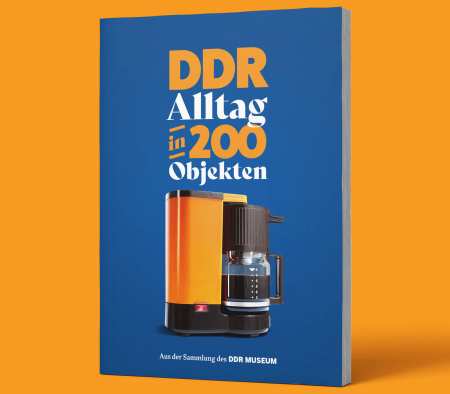
Illustrated book »GDR Daily Life in 200 Objects«
28 Feb 2023Read more
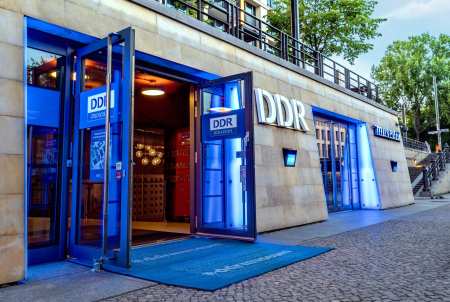
Expected reopening of the DDR Museum by 1 April 2023 at the latest
22 Dec 2022Read more

DDR Museum opens new special exhibition
21 Apr 2022Read more
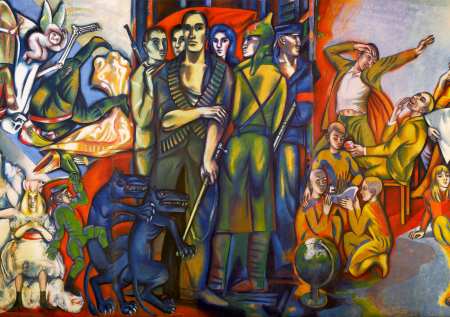
DDR Museum publishes digital exhibition
5 Nov 2020Read more
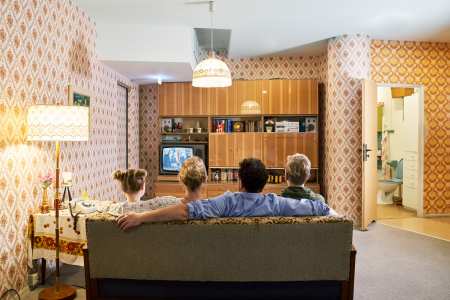
DDR Museum is most popular sight in Berlin
12 Oct 2020Read more
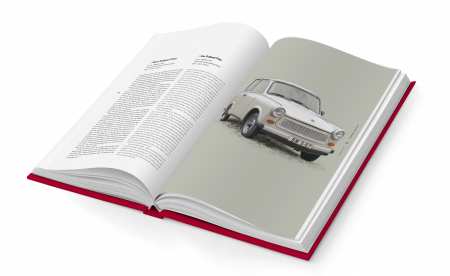
Press conference: »GDR in Objects 1949-1990. Leisure, Culture, Travel«
25 Sep 2020Read more
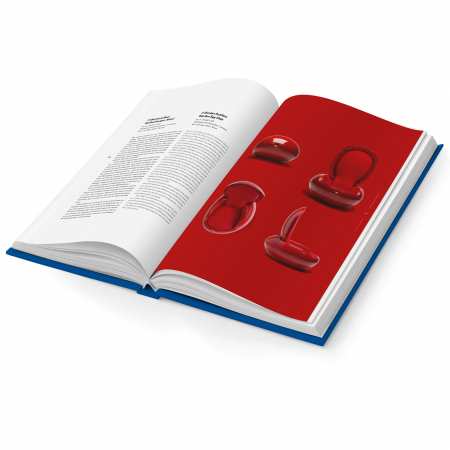
Press release and Invitation: »GDR in Objects 1949-1990«
7 Jul 2020Read more
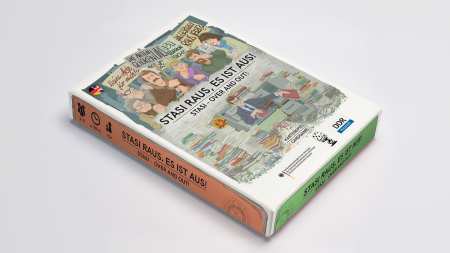
Invitation to press presentation: »Stasi – over and out!«
19 Dec 2019Read more

Long Night of Museum at the DDR Museum
19 Aug 2019Read more

The DDR Museum welcomes its six millionth visitor
12 Aug 2019Read more

Newly designed 0 Euro Souvenir Note
22 May 2019Read more

»DDR-Guide« as an eBook in five languages
31 May 2018Read more

Special Exhibition »Love, Sex & Socialism«
19 Mar 2018Read more

DDR Museum publishes new exhibition guide
24 Aug 2017Read more
FAQ for journalists
May I interview visitors at the DDR Museum?
Can I film during the opening hours of the DDR Museum?
Yes, but please bear in mind that the DDR Museum is always busy and there may be a lot of noise. Filming is only possible after prior consultation with the spokesperson. The only condition is that our visitors can use all our installations at any time. Therefore, no areas will be closed off or restricted.
We recommend that you plan a shoot before (between 7 and 9 am) or after the opening hours (from 9 pm).
Is admission free of charge for journalists?
Yes. If you show your valid press card at the ticket office, you will receive a free press ticket after accreditation. One press ticket will be issued per press card.
Can I take photographs in the DDR Museum?
Yes, if the photos are used exclusively for reporting on the DDR Museum. All other uses must be approved by the spokesperson.
How can I find an interview partner?
Several interview partners are available to you for reporting on the DDR Museum. Please always contact the spokesperson first for interview requests.
How can I receive updates from the DDR Museum?
You can subscribe for the press distribution list of the DDR Museum. Please register here for the press newsletter. You will then receive all press releases.
How can I film without visitors in the picture?
You can shoot at the DDR Museum by arrangement before or after the opening hours, from Monday to Thursday between 7 and 9 am or after 9 pm. If your filming is about reporting on the DDR Museum, your filming permission is free of charge. If you would like to use the museum in another context, e.g. as a backdrop, for photos/films or to shoot moderation contributions, this is also possible for a fee. Please contact the spokesperson for permission to film.
What are the lighting conditions like in the DDR Museum?
There is little natural light in the DDR Museum. For filming, you usually need additional artificial light sources. There are power sockets in several places in the DDR Museum that you can use.
Where can I find press images?
You can find press photos in printable quality here. You may use them free of charge for reporting on the DDR Museum. The copyright is »DDR Museum, Berlin 2022«. Any other use must be agreed in advance with the spokesperson. Please send an e-mail to presse@ddr-museum.de.
When did the DDR Museum open?
The DDR Museum was ceremoniously opened on 14 July 2006 by the then Senator for Culture and the Mayor. Since the first day of opening on 15 July 2006, it has already been visited by more than 6.5 million people from all over the world (as of 9/2020).
How did the idea for the museum come about?
On a trip to Berlin, the Freiburg ethnologist Peter Kenzelmann wanted to visit a DDR museum. He was convinced that one existed. At the tourist information office, he learned that there were memorials on the history of the state security and the Berlin Wall, but not a museum on the history of life under the GDR dictatorship. So the idea was born and it became clear that until then, museums only dealt with individual topics of the GDR, but did not explain the strong influence of the socialist state on all areas of life of its inhabitants.
Where do the exhibits come from?
Most of the exhibits come from private households. Thousands of different donors have preserved objects for posterity. Some of the exhibits are on permanent loan. Others, such as the Trabant car, were purchased.
How many objects does the DDR Museum own?
The collection of the DDR Museum currently comprises over 300,000 objects (as of 1/2022). These are kept separately from the exhibition in a depot that is not accessible to the public for security reasons.
Can I shoot in the depot of the DDR Museum?
For security reasons, the depot is not open to the public. Therefore, it is only possible to photograph or film there in exceptional cases and after specific arrangements have been made.
However, we will be happy to provide you with printable press photos from the depot.